Right now, it’s peak fall mushroom season in the Hudson Valley, and understanding Hudson Valley air quality has never been more important. The puffballs are going crazy, devil horns look like male anatomy poking through the forest floor. Walking through the woods feels like moving through a truffle-scented haze. Early morning, mist still hanging in the trees, deer scattering about. Meanwhile, mice rustle through the grass while squirrels frantically gather nuts, and the trees oblige by dropping their treasures — acorns pinging off car hoods and tin roofs, sounding like BBs hitting targets at a seaside carnival in Maine

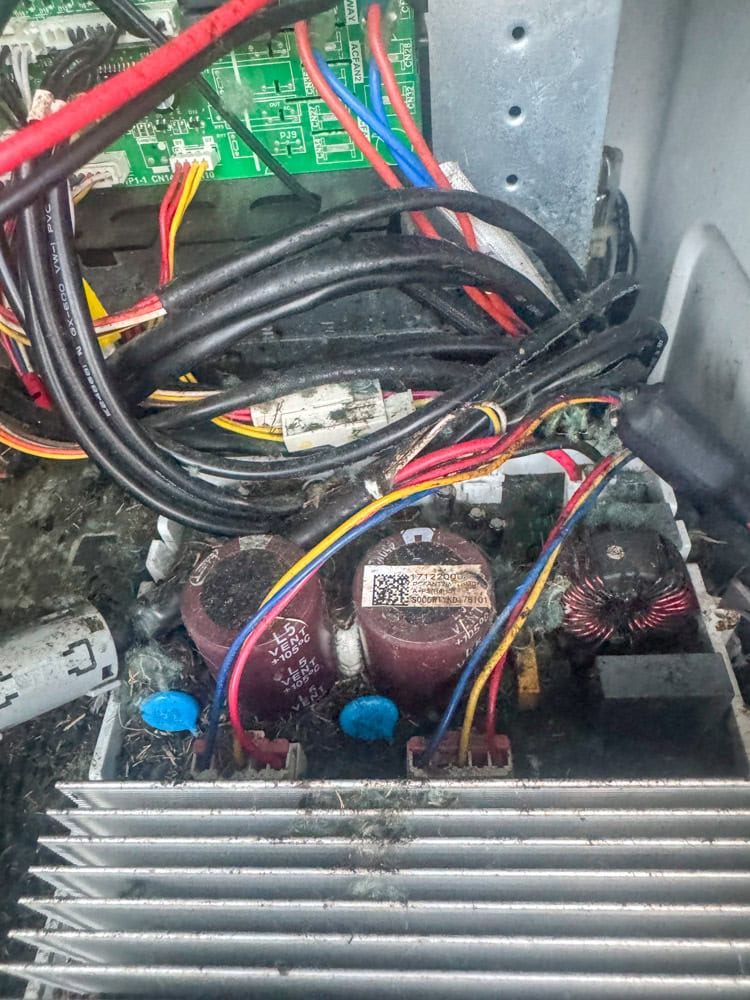
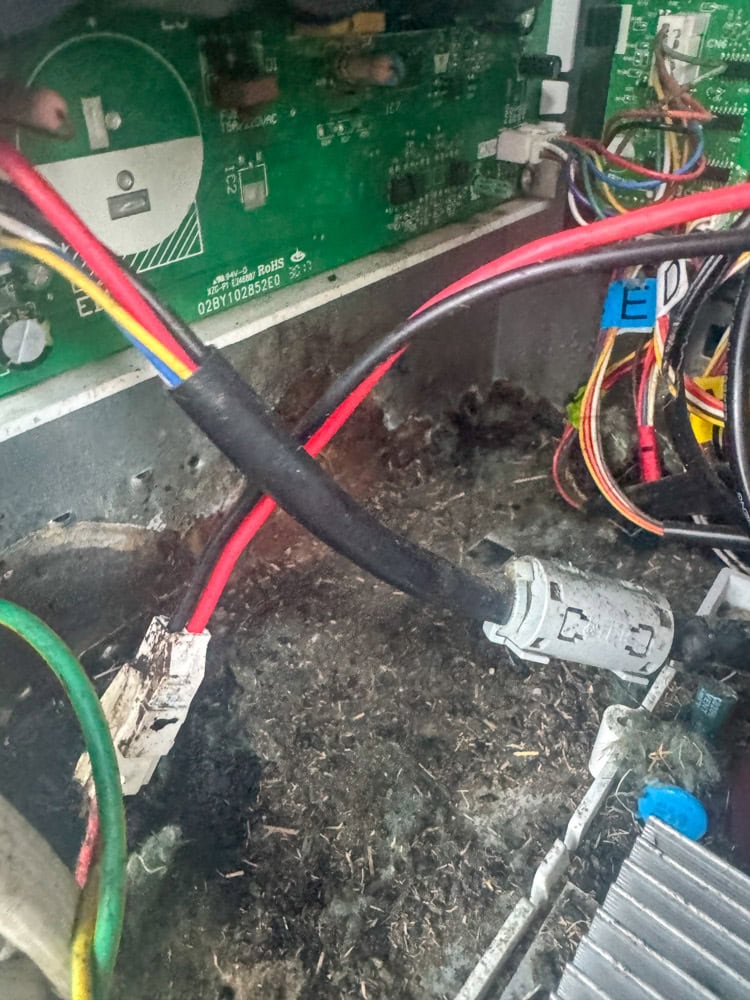
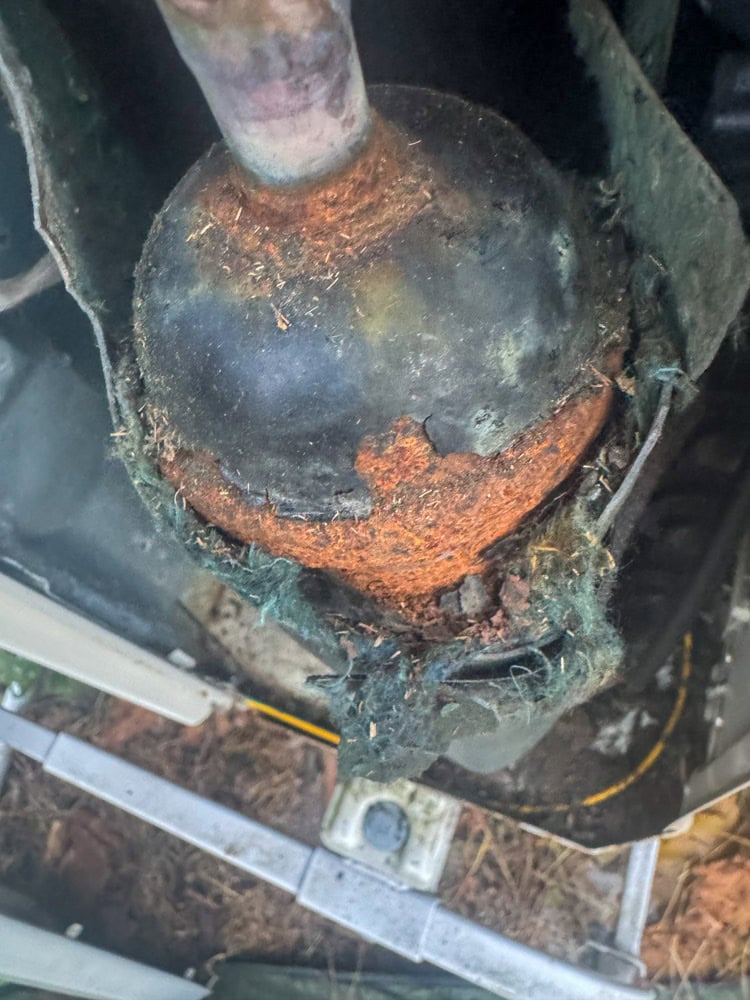
Last week I was checking on a system where mice had made their home in the condenser. The mice did not mix well with the machine — this is going to be a replace situation. As a result, even more reasons why wellness plans are important.
The deer eat the mushrooms. Squirrels gather the acorns and hickory nuts. Mice burrow and nest, carrying spores on their fur. Everything eats, everything spreads — seeds, spores, pollen. It’s how the forest works. Furthermore, oak and hickory drop their treasures, truffles release their scent to attract animals, and the whole ecosystem conspires to distribute itself across the landscape. Beautiful. Until it gets inside your house.
It was beautiful in that November way — a little wild, a little misty, a little magical.
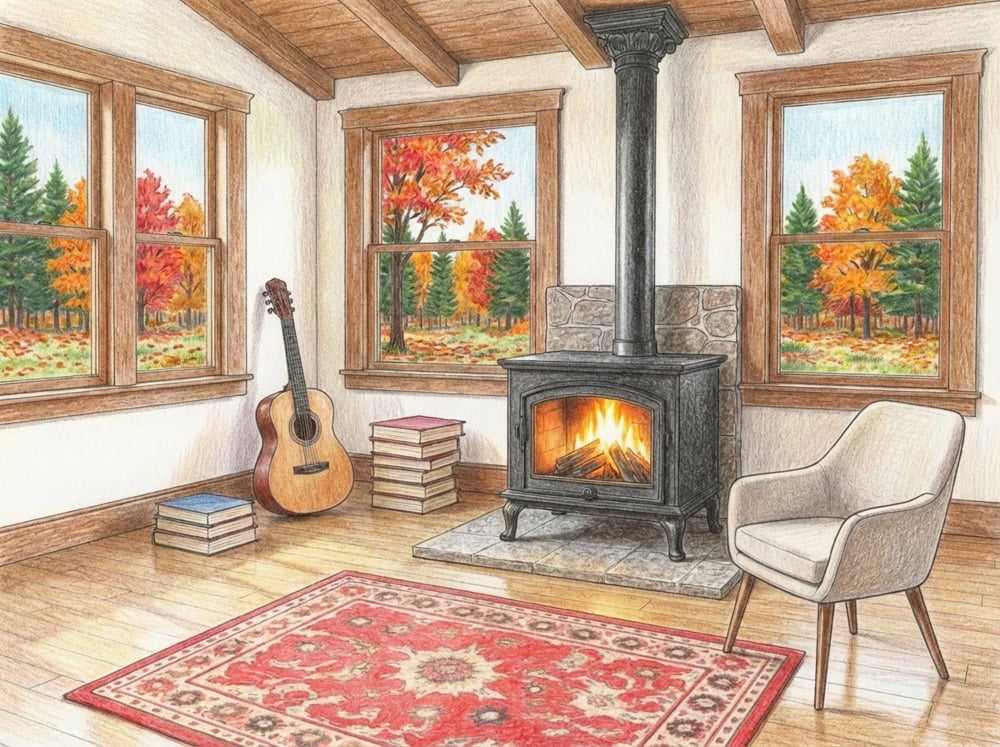
I love going into homes in Ulster County and beyond. A lot of the seasonal houses have wood stoves and electric baseboard heat. However, the electric is expensive to run, so most people don’t. These are my favorite service calls. Laid back and chill. There’s usually a stack of books near the stove, a guitar or mandolin leaning in the corner, always a piano or keyboard. The smell of wood smoke mixed with whatever someone’s cooking — cinnamon, garlic, rosemary. Cozy.
Wood stoves are magical. Wood is a sustainable resource. They’re also a P.I.T.A. — a Pain In The A** (let’s be honest). Not everyone wants to be Laura Ingalls Wilder every single day, not to mention the risk of fire.
Nevertheless, I love these homes. I love the people who choose this life.
A few days ago, I heard a story I can’t stop thinking about.
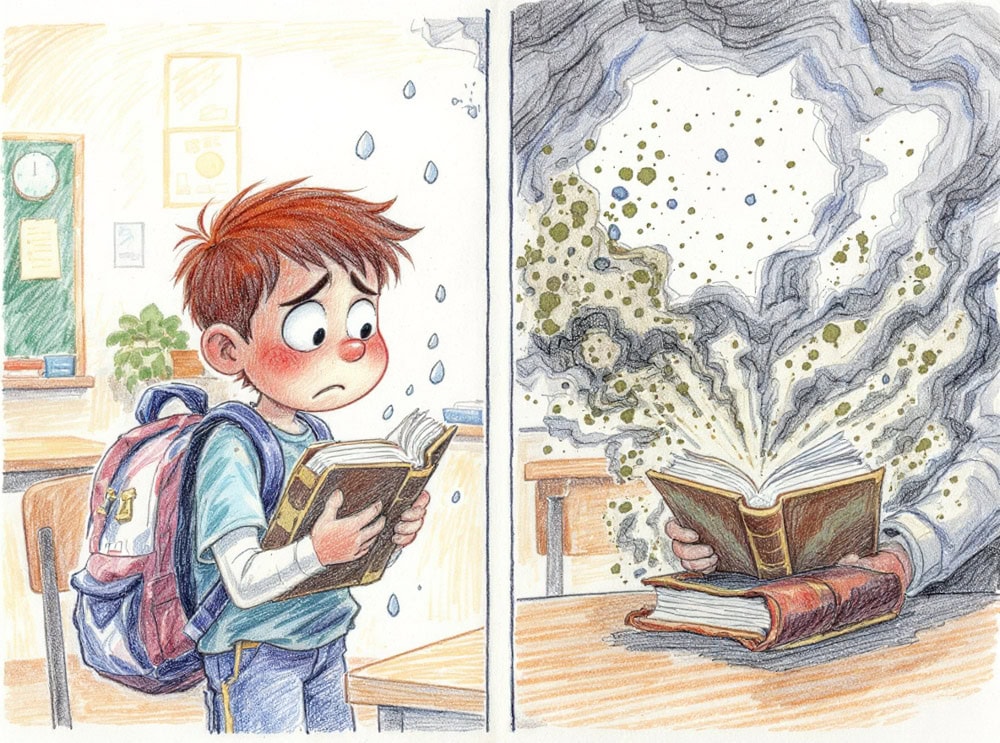
A boy got a library book wet. Instead of telling anyone, he tried to hide it in his backpack — you know how kids are. The book sat there for a week in the warm, wet dark.
Eventually, his teacher asked him about the book. Taking it out, he handed it to her.
The cover was swollen, and the pages were matted together. When she opened it, she immediately got a whiff of the mold spores. Her face swelled up just like that book cover. She started gasping for air, grabbed her EpiPen. Ambulance. Hospital. She was out for almost a week.
Mycotoxins are no joke. According to peer-reviewed research, mycotoxins can cause serious health effects including respiratory issues and immune system suppression. The EPA emphasizes that controlling moisture is key to preventing mold growth and maintaining healthy indoor air quality.
I also know what it’s like when the air turns against you.
After years of suffering, I finally found out my son is allergic to wood. Specifically hickory and oak. According to the Asthma and Allergy Foundation of America, both hickory and oak are classified as “very allergenic” trees. My neighbors have a giant shagbark hickory in their yard behind our house, right near his bedroom window. Consequently, the wind comes off the mountain and blows pollen and nuts straight toward us. All those years I threw open his windows to “air out his room” his allergies exploded — my guilt as his mother is untold.
Furthermore, I have to be very careful with campfire smoke now. Camping can turn into a nightmare for him if we burn oak or hickory. It took years to figure out why he would always wake up in the tent with headaches.
Climate change is making these issues worse — prolonged air quality events are becoming more common in our region.

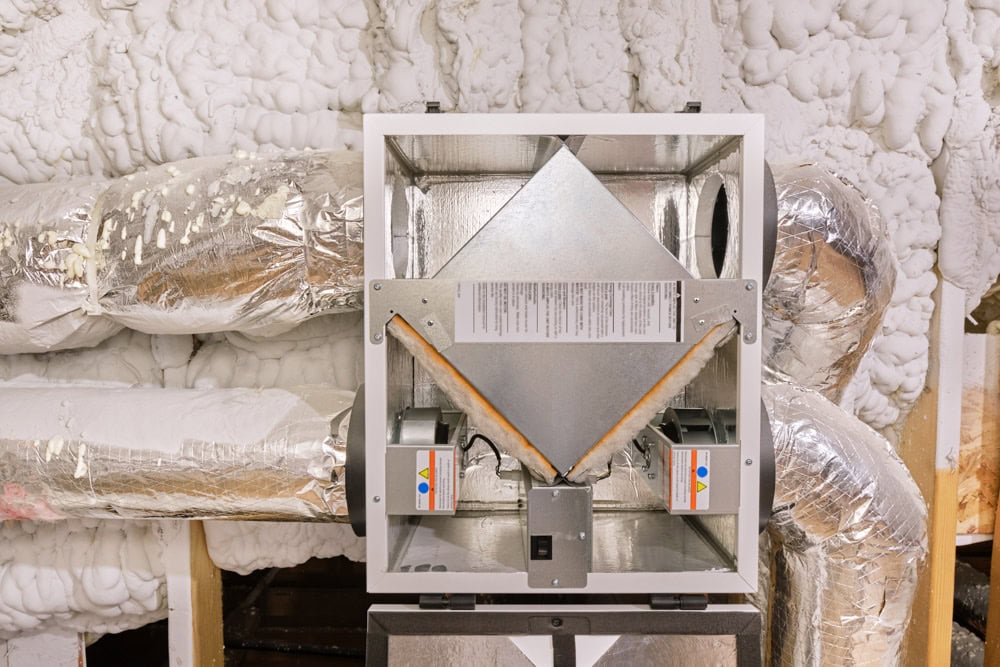
We installed media filters in our home’s HVAC system — the kind that actually catch particles, not those flimsy blue things that come standard with most. Next spring, we’re installing an ERV (Energy Recovery Ventilator) after we update the insulation in our attic and make our house tighter.
Because here’s the thing: when you make your house more efficient, you also make it tighter. Less air leakage means lower heating bills, but it also means you need controlled ventilation. Therefore, the ERV brings in fresh air while keeping the heat (or cool) you paid for. In addition, it filters what comes in and exhausts what needs to go out.
If you’re building or moving into a new home, proper air quality setup from the start is essential.
Here’s what I think about when I’m walking through that truffle-scented haze to those beautiful wood-stove homes: those puffballs releasing their spores? They’re cousins to the same molds that grow in damp, warm places. The wood smoke that smells so cozy? My son can’t breathe around certain kinds.
That giant shagbark hickory is right there, and the wind comes off the mountain straight toward us.
The wood-stove life is appealing until someone can’t breathe. Or until you don’t feel like chopping wood on a Tuesday morning in February.
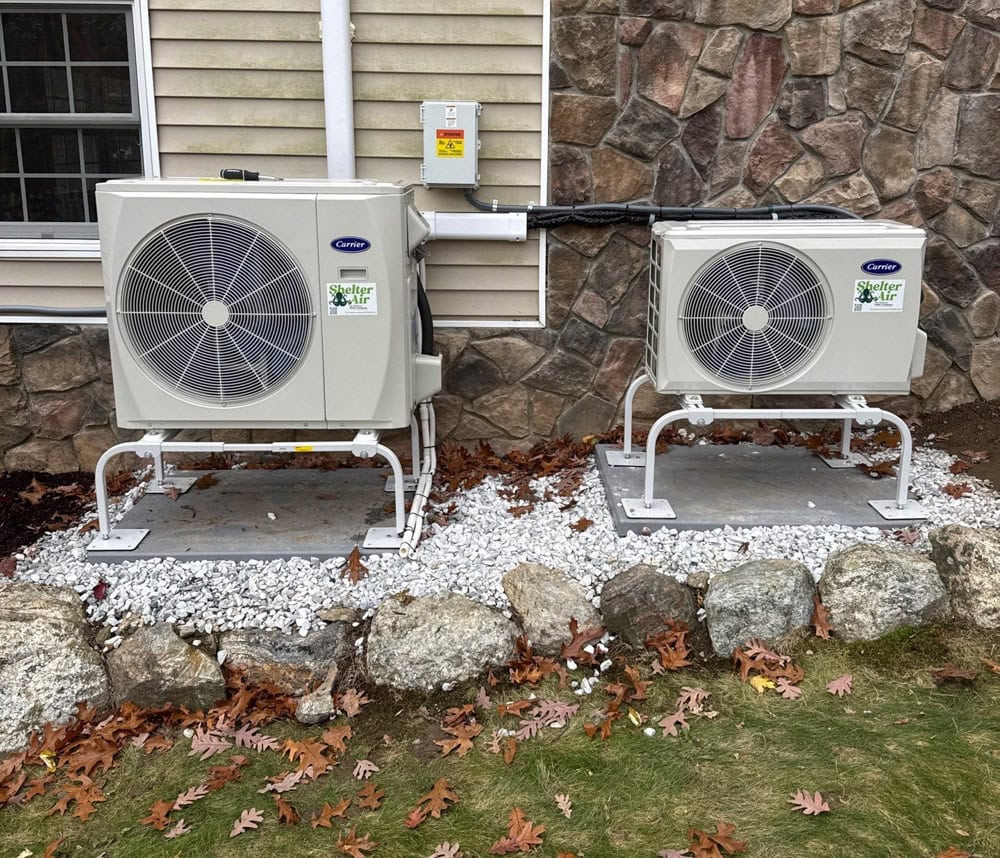
Heat pumps use about 3 to 4 times less electricity than electric baseboard. The Department of Energy confirms that modern air-source heat pumps can reduce electricity use for heating by up to 75% compared to electric resistance heating. Additionally, you can turn them on from your phone before you even leave the city. You get filtration. You get dehumidification without work and the smoke — and mold can’t grow without moisture.
You can have the books and the music and the life you’re choosing. You just need to be able to breathe while you’re doing it.
Improving Hudson Valley air quality doesn’t mean giving up the cozy seasonal home life. Instead, it means making it sustainable for your health and your family. Plus, federal tax credits up to $2,000 are available for heat pump installations through 2032.
That’s what we do.
Stay safe out there, and happy Thanksgiving Y’all –
Kimberly
Need help with your home’s air quality? Contact Shelter Air for a consultation on heat pumps, ERVs, and filtration systems designed for Hudson Valley homes.