It just stopped snowing.
They’re calling this one of the worst storms in New York history — and yet spring is only 25 days away.
Last night I was optimistically thumbing through my favorite seed catalog, dreaming about nasturtiums, lettuce, and tomatoes, waiting for the storm to hit.
Spring in the Hudson Valley
Spring.
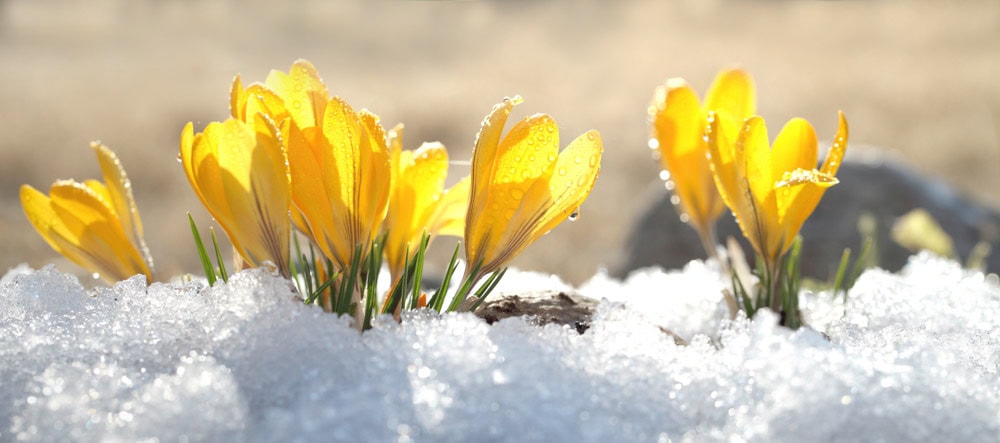
If you close your eyes for a second, you can almost smell it. That damp, fresh earth scent on a cold morning. Witch hazel blooming before anything else dares to. Hellebores holding their ground in the frost. Crocuses pushing through. Wood hyacinths not far behind. Bees, somehow, always knowing when to show up.
Spring in the Hudson Valley is beautiful.
And then the pollen starts.
Oddly, the pollen isn’t just from the blooms you see. It’s from the trees — and with our mountains, we don’t have a shortage of them or green spaces. According to the New York State Department of Environmental Conservation, species like oak, maple, birch, and hickory are widespread throughout our region.
Common Hudson Valley Tree Pollen Timeline
Very Early (Late March – Early April)
- Red Maple / Silver Maple
- Elm
- Willow
- Poplar / Aspen
- Birch (often early–mid April and highly allergenic)
Mid-Spring (Mid April)
- Sycamore (American sycamore)
- Ash
- Beech
Peak Season (Late April – May)
- Oak (major producer, highly allergenic)
- Hickory (including shagbark)
- Walnut
- Mulberry
Late Spring (May – Early June)
- Pine (the visible yellow dust — dramatic but typically less allergenic than oak)
- Sumac
- Cedar / Juniper
Tree pollen is one of the most common seasonal allergy triggers. The American Academy of Allergy, Asthma & Immunology explains how microscopic airborne pollen particles can travel easily and enter homes through open windows, doors, and ventilation systems.
Why Allergy Season Feels So Intense
My son is allergic to oak and hickory. We have a massive shagbark hickory behind our house. Before I knew what he was allergic to, I used to throw open his windows for “fresh air.”
It didn’t help.
What made the difference wasn’t a tabletop purifier humming in one corner. It was upgrading the system that moves air through the entire house.
We installed April Aire MERV 13, media filtration (as defined by ASHRAE filtration standards ), added in-duct purification, and I put additional returns in the bedrooms so the air actually circulates and gets cleaned where he sleeps.
The next step — what I call a Fresh Air Machine (ERV) — helps balance stale indoor air with filtered outdoor air. The U.S. Department of Energy explains how Energy Recovery Ventilators (ERVs) improve ventilation while maintaining energy efficiency.
Here’s what most people don’t realize:
Allergy season isn’t just about what’s blooming outside.
It’s about how your house handles what gets inside.
Get Ahead of Pollen Season
Spring is 25 days away.
If you want to get ahead of pollen season in the Hudson Valley, now is the time to:
- Upgrade your filtration system
- Install a filter change alarm
- Discuss a Fresh Air Machine (ERV)
- Schedule a focused Indoor Air Quality consultation
Small adjustments. Real difference.
And because I’m curious — what’s your favorite early spring bloom?
Stay warm. The bees will be back soon.
— Kimberly
Shelter Air
No Ordinary HVAC Company